What is the denominator on our 28T national debt?
I am worried that the national debt has hit 28T.
But consider personal debt. Someone who owes $28K may have a lot of debt or not, depending on the denominator. No denominator blindness. If he has a negative net worth, 28K is a big deal, but if he has a net worth of 28M, who cares?
What is the denominator on our 28T national debt?
The Denominator on our 28T national debt
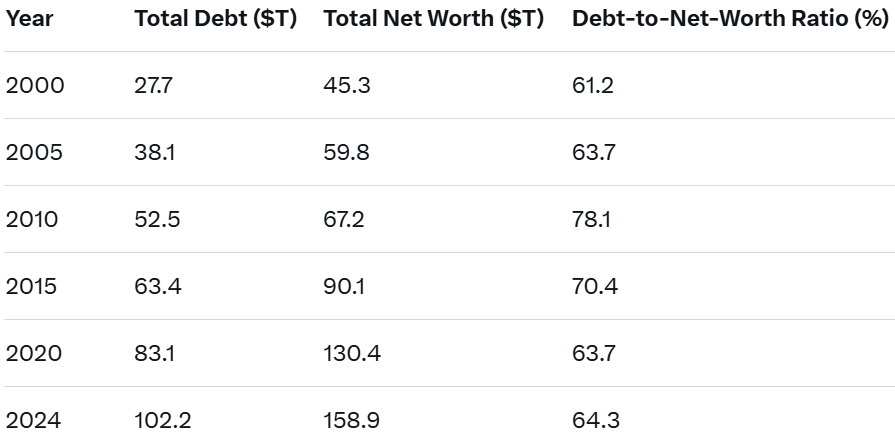
Above, see 5-year increments on the US Debt-to-Net-Worth ratio in percentage on the far right. Let’s take a step back and see what we are looking at.
From 2000 to 2024, the total debt of the US has grown from 27 trillion to 102 trillion.
What is the denominator? It’s the total net worth of the USA. Many assume the US has a negative net worth, referring to the net worth of the US government, but that’s incorrect because the denominator includes the total net worth of the entire United States. To look at the debt without considering the denominator is denominator blindness.
US net worth grew from 45 trillion in 2000 to 159 trillion in 2024. A CAGR of 5.4%.
Am I Concerned about 28T of National Debt?
So, am I still concerned about the 28T national debt? Yes, for the last 20 years. This public sentiment is supported by the 5-year increments in the US Debt-to-Net-Worth ratio, which peaked in 2010 and has been declining since.
Our national debt level was at its highest after the GFC and has been declining since.